
Why Stretching Alone Is Not Fixing Your Back Pain
You stretch your hamstrings. You do the figure-four stretch. You twist your back until it cracks. It feels better for an hour.
Then the tightness comes right back.
That cycle is frustrating because stretching seems like the obvious answer. If your back feels tight, make it looser. If your hips feel stiff, stretch them harder. If your hamstrings pull, hold the stretch longer.
But back pain is rarely that simple. Tightness is often a signal, not the whole problem. The body may be guarding, compensating, or asking for strength in places that stretching cannot provide.
This article is for general education only. Back pain can come from many causes, so persistent, worsening, or severe symptoms should be checked by a qualified health professional.
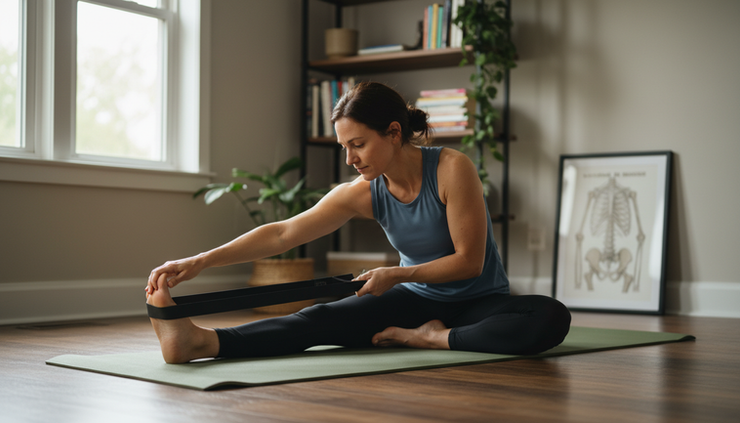
Stretching can help, but it may only be calming the alarm
Stretching is not useless. It can reduce discomfort, improve your sense of movement, and give short-term relief. Many people feel better after a gentle stretch because the nervous system relaxes for a while.
That relief is real.
The problem is when stretching becomes the only tool.
A tight back is not always a short muscle problem. Sometimes the brain increases tension in an area because it does not feel safe with a certain movement, load, or position. That tightness can act like a protective brake.
Think of it like a car warning light. Covering the light does not fix the engine. Stretching may quiet the sensation for a bit, but the body may tighten again if the reason for the warning has not changed.
Common reasons stretching gives only temporary relief include:
The area feels tight because it is doing too much work.
Nearby muscles are not helping enough.
The body lacks control through a range of motion.
A tissue is irritated and sensitive.
Daily positions keep reloading the same pattern.
Stress, poor sleep, or low activity raise overall sensitivity.
This is why a person can stretch every day and still wake up stiff every morning. The stretch changes the feeling for a short time, but the body returns to the same strategy.
Lasting improvement usually needs more than flexibility. It often needs strength, coordination, better movement options, and gradual exposure to the activities that currently trigger pain.
Your “tight hamstrings” may not be the real problem
Hamstring stretching is one of the most common fixes people try for back pain. It makes sense. The hamstrings attach to the pelvis, and the pelvis affects the lower back. If the hamstrings feel tight, stretching them seems logical.
Still, tight hamstrings are not always short hamstrings.
Sometimes they feel tight because the pelvis is held in a position that keeps them under tension. Sometimes the lower back, hips, and hamstrings are sharing load poorly. Sometimes nerve sensitivity creates a pulling sensation that feels like a muscle stretch.
That does not mean every hamstring stretch is bad. It means the stretch may be answering the wrong question.
A better question is:
What is making this area feel like it needs to stay tight?
For example, if the glutes are not contributing well during walking, lifting, climbing stairs, or getting up from a chair, the low back and hamstrings may pick up extra work. The person may feel constant hamstring tightness, even after stretching daily.
In that case, more stretching can become a loop:
The hamstrings feel tight.
They get stretched.
The body feels loose for a while.
The same movement pattern returns.
The hamstrings tighten again.
The missing piece may be strength and control, not more range.
The same idea applies to the hip flexors. Many people stretch the front of the hip because sitting makes that area feel stiff. A hip flexor stretch may feel great. Yet if the trunk and pelvis cannot stay controlled during standing, walking, or exercise, the front of the hip may keep guarding.
Tightness can be a symptom of instability, overload, or sensitivity. Stretching may soothe it, but it will not always solve it.

Back pain often improves when strength and control improve
The lower back is built to move, but it also needs support from the hips, trunk, legs, and even the feet. When these areas do not share work well, the back can become the place that absorbs too much stress.
This is why strength work often matters.
Strength does not mean heavy barbell lifts on day one. It means giving the body a reason to trust movement again. It means building tolerance in a way the nervous system accepts.
Helpful strength work often includes:
Hip hinges
Glute bridges
Side planks
Bird dogs
Step-ups
Split squats
Carries
Bodyweight squats
Gentle dead bug variations
The right exercise depends on the person, the pain pattern, and the current capacity. A movement that helps one person may irritate another. The goal is not to chase soreness or prove toughness. The goal is to find movements that feel safe enough to practice and challenging enough to create change.
A useful rule is to watch the response.
Mild discomfort during a movement is not always a problem, especially if it settles quickly and does not flare later. Sharp pain, spreading symptoms, numbness, or pain that keeps increasing is different. That deserves caution and, when needed, professional guidance.
Good strength work for back pain usually has three features.
It is controlled
Fast, sloppy reps often miss the point. Slow, controlled movement teaches the body how to manage positions.
For example, a hip hinge trains the hips to move while the spine stays steady. This can help with daily tasks like picking up laundry, lifting groceries, or leaning over a sink.
It is progressive
The body adapts when the challenge grows over time. That can mean more reps, more range, more resistance, or a harder variation.
Progress does not need to be dramatic. Small changes add up when they are consistent.
It is relevant
If your back hurts after sitting, you may need movement breaks, hip strength, and trunk endurance. If it hurts after lifting, you may need better hinge mechanics and gradual load exposure. If it hurts after long walks, hip endurance and step control may matter.
Stretching alone does not teach the body how to handle these demands. Strength and control do.
Mobility is more useful when you own the range
Flexibility is passive. Mobility is active.
Passive flexibility is how far a joint or muscle can move when gravity, a strap, a wall, or your hands help it. Active mobility is how well you can control that range on your own.
That difference matters.
If you lie on your back and pull your knee toward your chest, that is passive hip motion. If you stand, lift your knee, and hold it with control, that is active hip motion. The second version asks more from your nervous system, muscles, and coordination.
For back pain, active control often matters more than forcing deeper stretches.
Here is a simple example. A person may have enough hip range to squat, but they cannot control the bottom position. Their back rounds, hips shift, or knees collapse inward. Stretching the hips more may help a little, but the bigger need may be learning how to control the range they already have.
That is where mobility drills fit.
They bridge the gap between stretching and strength. They ask the body to move through range with attention and effort.
Examples include:
Controlled cat-cow movements
Hip controlled articular rotations
90/90 hip switches
Slow squat-to-stand drills
Rock-back hip hinges
Thoracic spine rotations
Ankle mobility with control
These should not feel like punishment. A good mobility drill feels specific, focused, and repeatable. It should leave the body feeling more prepared for movement, not irritated.

Daily habits can keep re-creating the same pain pattern
A few minutes of stretching may not overcome the other 23 hours of the day.
That does not mean posture is everything. There is no single perfect posture everyone must hold. The body likes variety. Problems often show up when a person stays in the same position too long, repeats the same movement too often, or avoids movement because they fear pain.
Back pain often pairs with patterns like:
Long sitting with few breaks
Sudden weekend activity after a low-movement week
Repeated bending without hip support
Training hard without enough recovery
Avoiding all loaded movement
Shallow breathing and constant muscle tension
Poor sleep during a painful flare
A stretch can feel like a reset, but the same inputs keep returning.
If sitting triggers stiffness, one long stretch at night may not be enough. Short movement breaks during the day may work better. That could be as simple as standing up every 30 to 60 minutes, taking a short walk, doing a few hip hinges, or changing positions.
If lifting triggers pain, avoiding lifting forever usually does not build confidence. A better path may be to practice lighter lifting patterns, improve the hip hinge, and slowly build tolerance.
If stress is high, the body may carry more tension. Stretching can help calm the system, but breathing drills, walking, sleep routines, and lower-intensity movement may also matter.
The body responds to the full pattern, not one isolated stretch.
This is where many people get stuck. They hunt for the perfect stretch when their back needs a better daily plan.
A better plan combines relief, strength, and gradual return
Stretching can stay in the plan. It just should not be the whole plan.
A balanced approach to recurring back tightness often includes four parts.
Use stretching for short-term relief
Gentle stretching can be a useful way to reduce symptoms. Keep it comfortable. Breathe slowly. Avoid forcing positions or chasing a crack.
Good options may include:
Child’s pose
Knees-to-chest
Figure-four stretch
Hip flexor stretch
Gentle hamstring stretch
Open-book thoracic rotation
The goal is to calm the area, not win a flexibility contest.
Add strength where the body needs support
Pick a few simple exercises and practice them consistently. Good starting points often include glute bridges, bird dogs, side planks, and slow sit-to-stands.
Start easy enough that the body does not flare. Build slowly.
Practice the movements that matter
If bending is hard, practice a supported hip hinge. If walking feels stiff, build walking time gradually. If sitting is the problem, add regular position changes.
Pain often improves when the body relearns that normal movement is safe.
Track the response
Do not judge a plan only by how you feel during the exercise. Pay attention to the next few hours and the next morning.
Useful signs include:
Less frequent tightness
Quicker recovery after activity
More confidence with movement
Better sleep
Less need to stretch all day
More tolerance for walking, sitting, or lifting
Progress is not always perfectly steady. Back pain can fluctuate. The trend matters more than one rough day.

Know when stretching is not enough
Some back pain needs medical attention. Get urgent care if back pain comes with loss of bladder or bowel control, numbness in the groin or saddle area, major weakness, fever, unexplained weight loss, serious trauma, or severe pain that does not ease.
It is also smart to get help if pain travels down the leg with numbness or weakness, keeps worsening, or does not improve after a reasonable period of self-care.
A physical therapist, physician, chiropractor, or other qualified clinician can assess what is contributing to the pain and help guide the next steps.
Stretching is one tool. It can make the body feel better, and it may be part of a solid routine. But if the tightness keeps returning, the body is probably asking for something else too.
The better question is not “Which stretch fixes this?”
Ask instead, “What would help my back feel strong, supported, and safe during daily movement?”
That shift opens the door to real progress: less chasing tightness, more building capacity, and a back that does not need constant stretching just to get through the day.


Comments